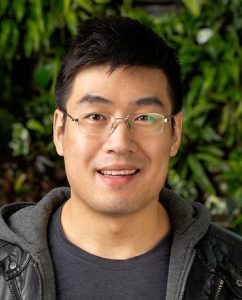
 Wenbo Lu, an IPiB graduate student, will be defending his Ph.D. research on February 12, 2026. His research in the Landick and Venturelli Labs examined how patterns of gene expression in gut microbiota influence the metabolites produced.
Lu’s research explored whether the common practice of measuring species abundance in the gut microbiome is a good proxy for predicting how the gut microbiome behaves. He focused on production of a short-chain fatty acid metabolite called butyrate, which is produced by gut microbiota and is important for gut health, reducing inflammation, and strengthening gut barrier integrity.
“In the past, people tended to focus on species composition when evaluating the functionality of the gut microbiome. Current microbiome testing services commonly look at the abundance of butyrate producers in the patient’s gut and use that to predict butyrate levels,” says Lu, whose work sought to determine whether other measurements may provide more nuanced data.
Lu established synthetic communities consisting of butyrate-producing species and other common gut bacteria. Using metatranscriptomic and qPCR data, he found that the abundance of certain mRNA sequences (transcripts) in the microbes was a better predictor of the amount of butyrate produced than the species composition of the community. These findings may have diagnostic implications for patients with diseases stemming from dysregulations in butyrate production.
“My findings suggest that transcript abundance may be more important than species abundance,” Lu says. Lu also experimented with genome modification tools such as CRISPR to tune butyrate production in synthetic communities, a step toward designing therapeutic gut microbiome.
For Lu, his exploration of the gut microbiome was an important constant over five years with many unexpected turns. He joined IPiB in 2020, unsure of how the COVID-19 pandemic would impact his research and education. Then, settled into his research after pandemic-related closures, he joined a new lab when his advisor, Ophelia Venturelli, began a position at Duke University. Landing in the Landick Lab provided Lu with a supportive environment during this transition. “I really want to thank Bob [Landick] because he allowed me to stay focused on my research without any major disruptions. He and the department have been very supportive,” says Lu.
While a graduate student, Lu participated in the Graduate School Industry Internship Program, which provides doctoral students with the opportunity to gain hands-on experience with industry-relevant challenges related to their field of study. His internship at Promega helped him build a vision for how his UW–Madison education can translate to a career in industry. “I learned a lot of skills that can be transferred to my future career,” Lu reflects. “My project applied machine learning methods to guide the design of proteins and substrates. In addition to building on my skills, I got to see how the industry environment differs from academia.”
Outside of the lab, Lu played on recreational league and intramural soccer teams, where he built community within and beyond the university. “The intramural soccer team here is a good mix of people,” says Lu. “It’s mostly undergrads, but there are graduate students and even professors from different departments. So I got to meet people from all different departments.”
To learn more about Lu’s research, attend his Ph.D. defense, “From mechanistic insights to synthetic biology: Understanding and modulating the human gut microbiome” on Thursday, February 12 at 11:00 a.m. CT in Room 2131 of Hector F. DeLuca Biochemistry Building.