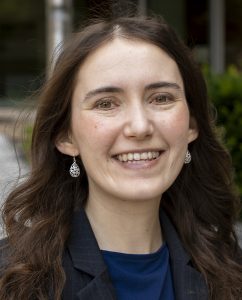
 Lauren Mazurkiewicz, an IPiB graduate student, will be defending her Ph.D. research on August 6, 2026. Her research in the Weeks Lab explored the role of diphthamide, a post-translational modification that is conserved across eukaryotes.
Post-translational modifications are changes that cells make to proteins after amino acid chains are assembled. Diphthamide is a post-translational modification that is only known to occur in elongation factor 2 (EF2), a protein that plays a key role in stabilizing ribosomes during translation. Despite its ubiquity, which proteins and cellular pathways are impacted by diphthamide remains unknown.
“Diphthamide was discovered because this modification is the target of certain bacterial toxins, including diphtheria. It is especially interesting that it’s a conserved modification because is also responsible for our susceptibility to serious bacterial toxins,” says Mazurkiewicz.
Mazurkiewicz compared protein abundances in yeast cells with and without diphthamide using mass spectrometry proteomics, creating a map of the proteins most heavily impacted by diphthamide. This map, says Mazurkiewicz, identifies proteins and pathways for future studies on the roles of diphthamide and the enzymes responsible for making the diphthamide modification.
In addition to her primary research, Mazurkiewicz used her technical skills to support colleagues’ research projects for studies published in PNAS and Current Biology. She also put her lab techniques to work at Promega, where she interned as a Biotechnology Training Program trainee. After she graduates, Mazurkiewicz will continue her research in the Weeks Lab as a post-doctoral researcher before pursuing a career in industry.
Mazurkiewicz served as the Graduate Leadership & Development Committee (GLDC) Outreach Chair for two years. After her term ended, she continued to seek outreach opportunities for herself and her colleagues in the Weeks Lab. Outside of the lab, Mazurkiewicz was an active member of the Madison Flute Club and performed with the ensemble, including at the Wisconsin State Capitol.
To learn more about Mazurkiewicz’s research, attend her Ph.D. defense, “Complementary proteomics approaches link diphthamide biosynthesis enzymes and cell surface remodeling” on Thursday, August 6 at 1:00 p.m. CT in room 1211 of Hector F. DeLuca Biochemical Sciences Building.
Written by Renata Solan.